The demand for products from the evergreen Manuka plant is growing worldwide, and for good reason. Modern cultivation methods now allow for sustainable use while simultaneously ensuring product quality.
In Waikura Valley, New Zealand, we are going a step further: We are developing and testing new cultivation methods for the production of Manuka- oil –, comparable to the established distillation of lavender oil.
Cultivation
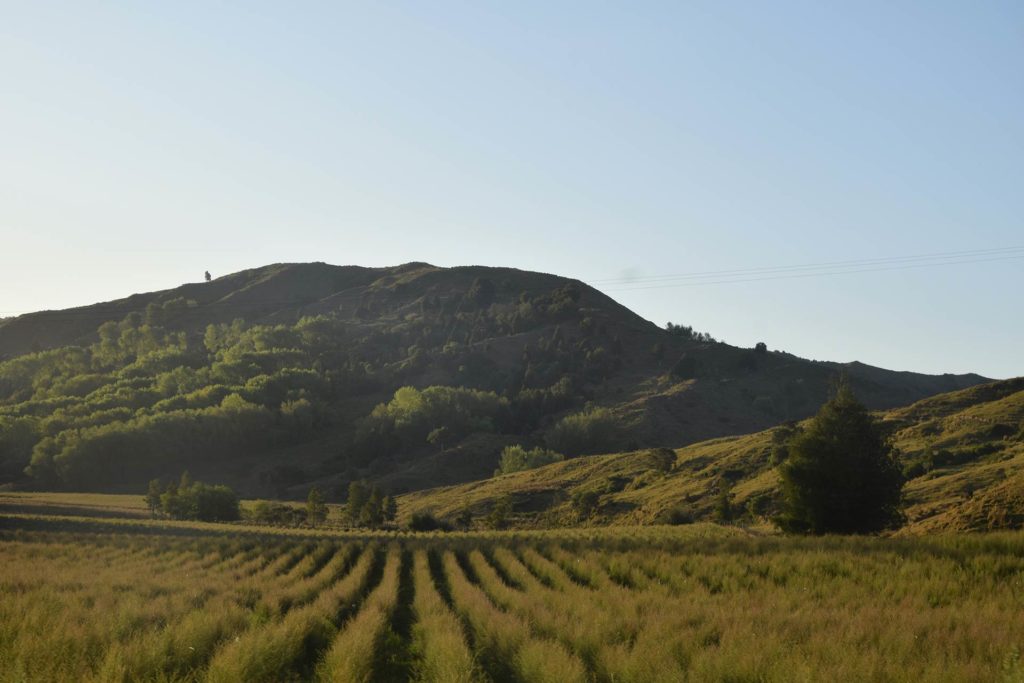
Our goal is to cultivate Manuka efficiently and sustainably, to produce a high-quality product that is as close to nature as possible. Therefore, we plant the Manuka-P plants in long parallel rows. Rows. This way we can use a regular pruning schedule. Take advantage of multiple harvests from the same plant and their Maximize lifespan to 10–15 years.
However, the first two years after planting are The most critical – the young plants must withstand quickly Growing weeds are competing. Meanwhile, we already have 32 hectares of former pastureland planted with Manuka. In addition, we have established a tree nursery where up to 15,000 Manuka plants in various stages of life are growing.
Field maintenance
Two measures are used to create optimal growing conditions for the Manuka Plant.
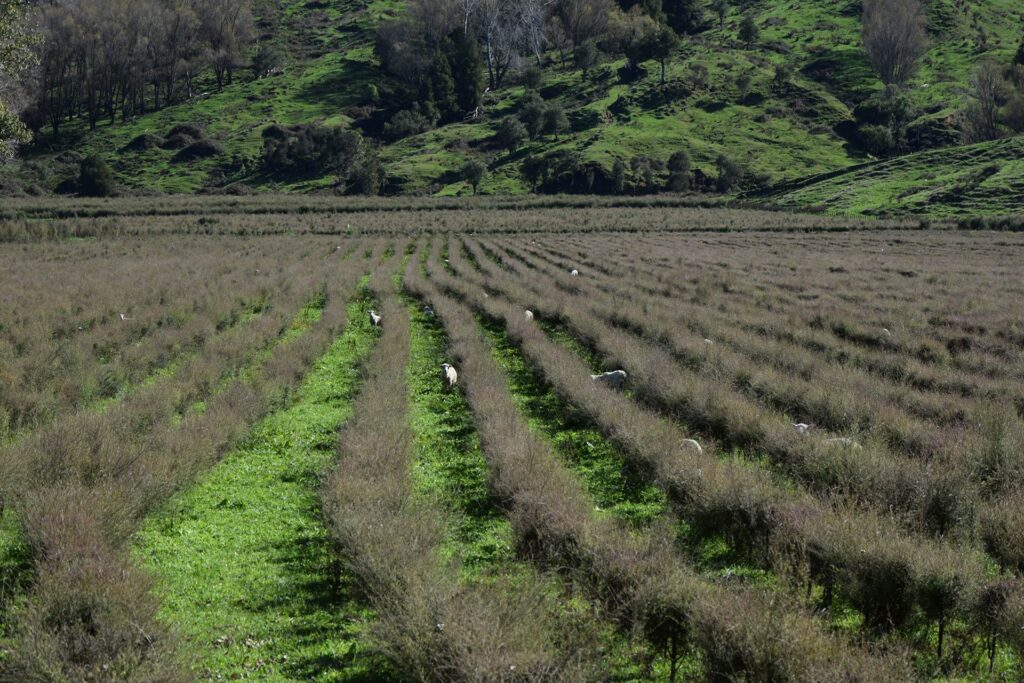
Firstly, the fields are grazed with young sheep. These eat the grass between and within the rows and ensure natural fertilisation of the soil. In return, the Manuka Plants provide shade and protection from the weather.
Then, the remaining grass in the intermediate rows is processed with a tractor-powered mulcher. The mulch material keeps the soil moist and suppresses emerging weeds. This means we completely dispense of using any chemical weed control agents.
Harvest
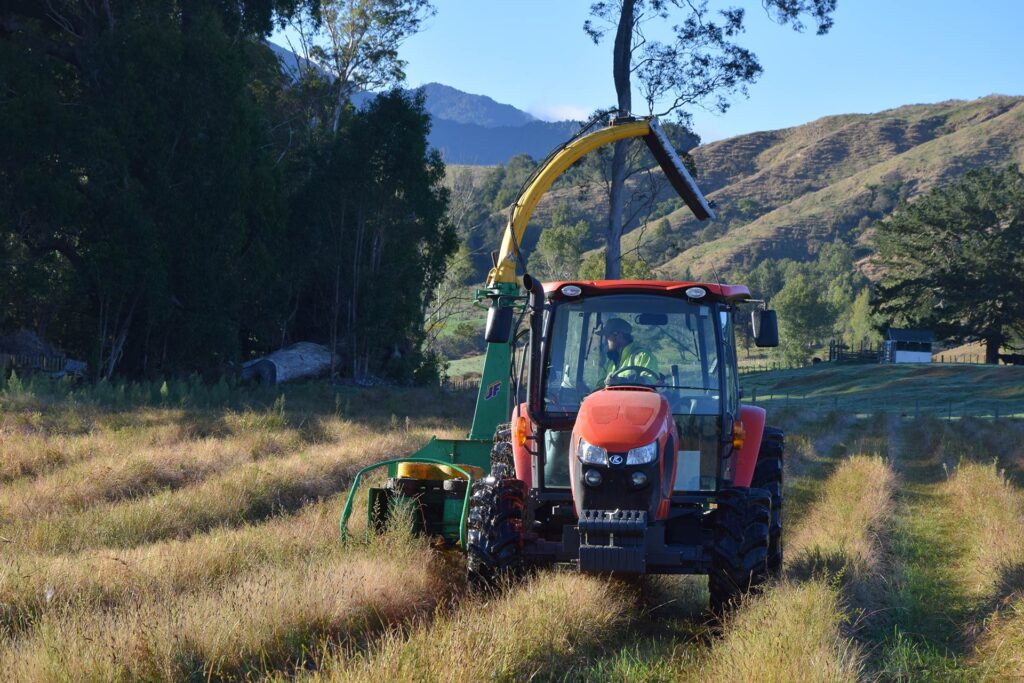
Harvesting is carried out using a sugar cane harvesting machine mounted on a tractor. This allows for a variable cutting height and a clean cut of the Manuka Plants, which is essential for the regrowth and health of the Manuka.
Leaves and green twigs up to a width of 5 mm are chopped directly into small pieces after cutting and filled into a distillation container. This is placed on the trailer of the tractor and is exchanged for an empty container in the distillation plant when it is full.
Cutting the material into smaller sizes simplifies handling and optimises oil extraction.
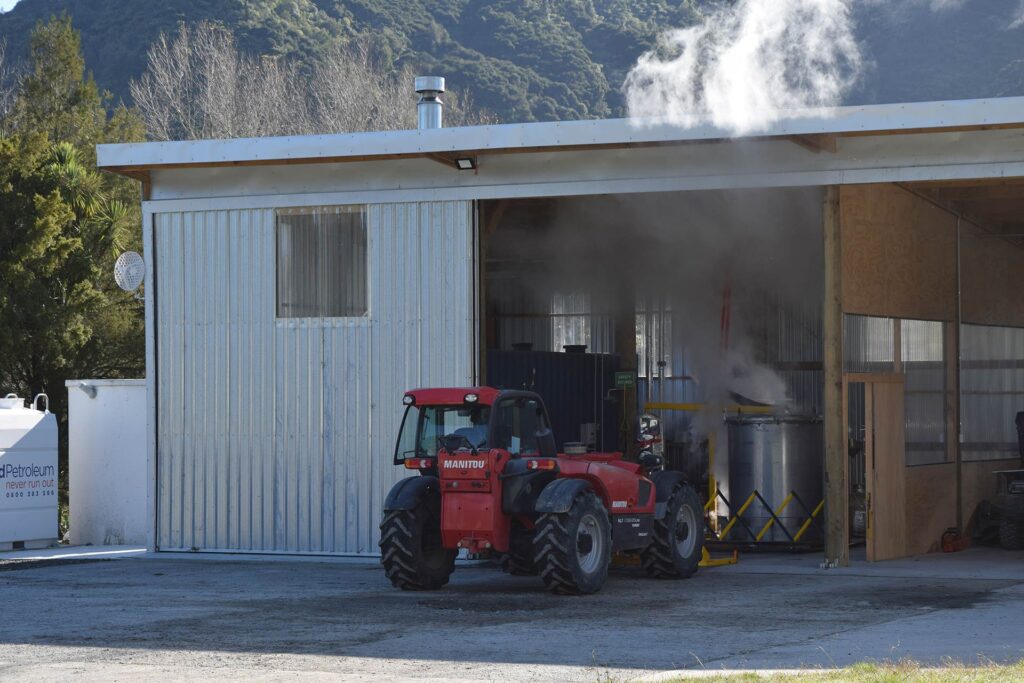
The container is connected to our in-house distillation system and the oil is gently extracted from the plant material using steam. Our distillation system was updated in 2023 and is probably the most modern and efficient system for extracting Manuka Essential Oil in the world.
The Manuka Oil is filled directly into aluminum bottles and covered with protective gas. As an important element of quality control, samples from each distillation batch are sent to the laboratory.
The organic pomace left over from the distillation process is reused after harvesting between the rows of Manuka Plants as a natural weed preventer. In addition, the pomace serves as a source of valuable organic matter for the Manuka Plants and the soil.
In the distillation we strive for a content of at least 20 % Beta-triketones.
Wild manuka
Wild manuka has always grown on the steeper slopes of the Waikura Valley. This is also used as a supplement using a special harvesting device. As part of the natural indigenous flora, the Waikura Valley offers these Manuka Plants optimal growing conditions.
This website uses cookies. If you continue to use the website, we will assume your consent.